UTD 2025 - Senior Capstone Project
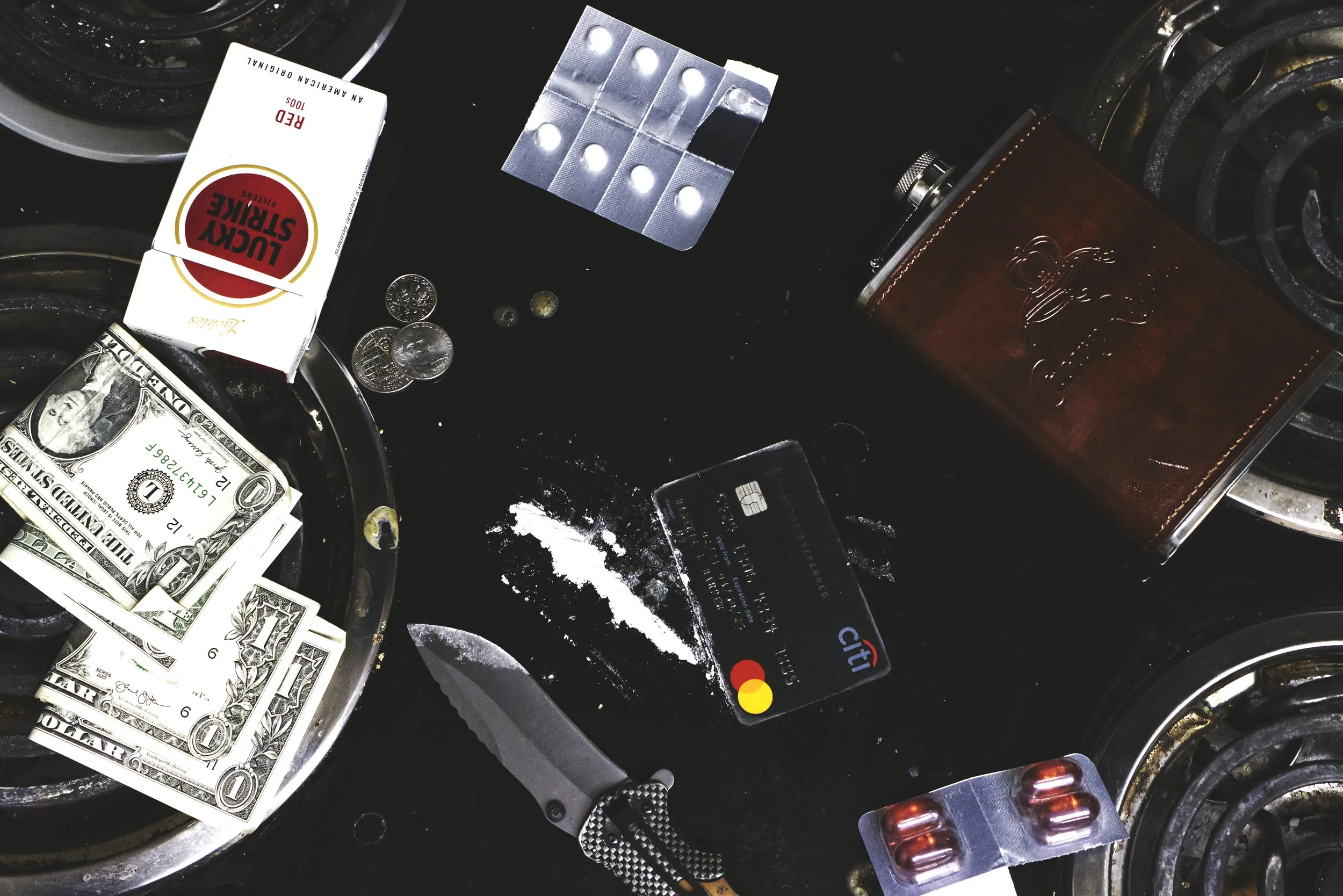
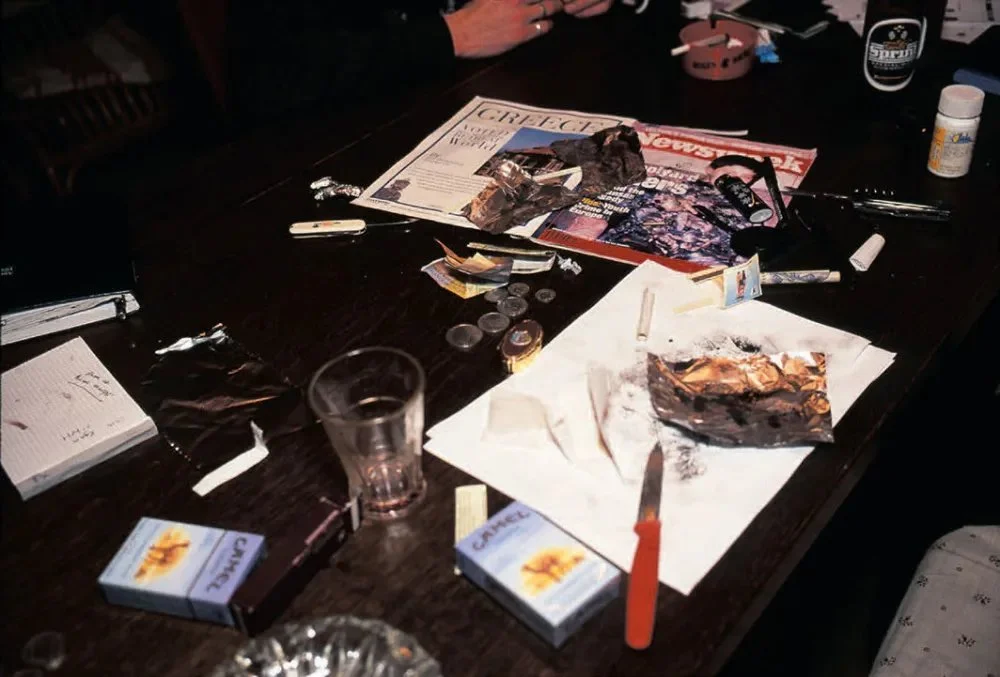
Nan Goldin, Memory Lost, 2019 (right)
Nan Goldin’s work takes an intimate, diaristic approach that merges art and lived experience. Goldin documents her own social world—drugs, friends, lovers, and marginalized communities—with unfiltered emotion. Her images often feature direct flash, saturated hues, and casual framing, making a raw, unpolished aesthetic that feels honest. Rather than composing scenes formally, Goldin allows for moments of vulnerability, conflict, and tenderness to unfold naturally. She photographs from within the communities she depicts, as a participant rather than an observer. This puts the photographer in the role of an insider, but leaves the audience feeling like an outsider witnessing an intimate moment they weren’t meant to see.
I knew emulating Goldin would be difficult, as I am not an insider within many of the communities Goldin photographs, so photos would appear insincere and my presence may not be welcome or appropriate in said communities. Instead of invading a community, I opted to stage a scene of the stovetop of a drug addict and alcoholic. I have suffered from addiction personally, so I had a goal in mind when setting up the scene to convey the exact feeling I wanted to share. This also meant that I was now an insider, even if it was a staged event. One problem I found however was that using flash was far too harsh on the image, and did not achieve the results Goldin produced using flash in a dark, open space. I had to choose to either expand my framing and redesign the scene, or add a general flash feel in editing. I chose the latter, raising the black tones to emulate a polaroid feel, and raising the highlights and adding a sheen to certain surfaces to emulate flash.

Vivian Maier, Untitled (right)
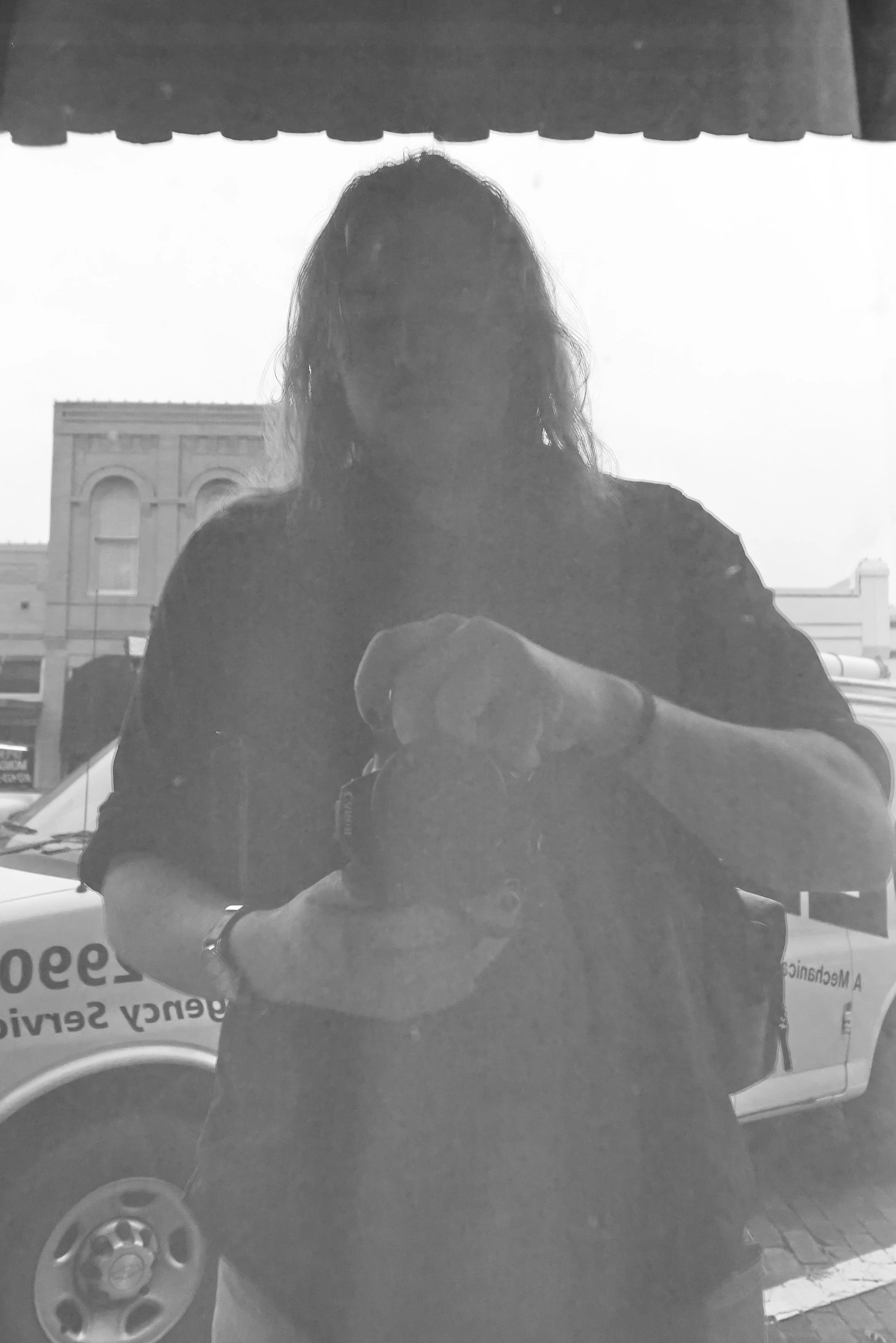
Vivian Maier is a rarity, as she never established herself in the art world as a photographer, opting to keep it an obsessive hobby. Her work can be defined as observational, precise, and quietly humanistic. Working primarily in black and white, Maier focused on street photography, documenting everyday life in mid-1900s urban America. Her images are carefully composed, with attention to detail and visual balance. While her subjects often appear unaware of being photographed, the resulting images are not detached; they convey empathy and curiosity. Maier’s approach was shaped in part by her use of a Rolleiflex camera, which she held at waist level. This perspective allowed her to photograph discreetly and capture candid moments without interrupting the scene. She gravitated toward ordinary people and moments of fleeting expression or gesture. Maier showed the world the result of mastering reflection, self-portraiture, and candid photography.
I do not possess a Rolleiflex, but the DSLR I use does have a movable screen, so I was able to emulate the way she shot, and I found it to be a far different experience than I imagined. It felt like I was looking at people through a window, remaining invisible and out of the way. I found Maier’s patience and timing to be incredible, as I had a difficult time capturing just the right details when shooting fleeting events as they occur. I did not initially plan on choosing to use a self-portrait for my final image, but as I passed a window in downtown, I liked the framing of the reflection and lack of glare from the sun due to the direction this window faced. I folded the screen down, looked into it to line up the shot, and took the picture. I purposefully did not pose or straighten my posture, as I wanted to let the final image look as natural and candid as possible. Overall, however, I feel more empowered and freed shooting through Maier’s eyes, as it has made street photography much more approachable for me as I learn to be comfortable taking pictures of public places and the events and interactions that transpire there.
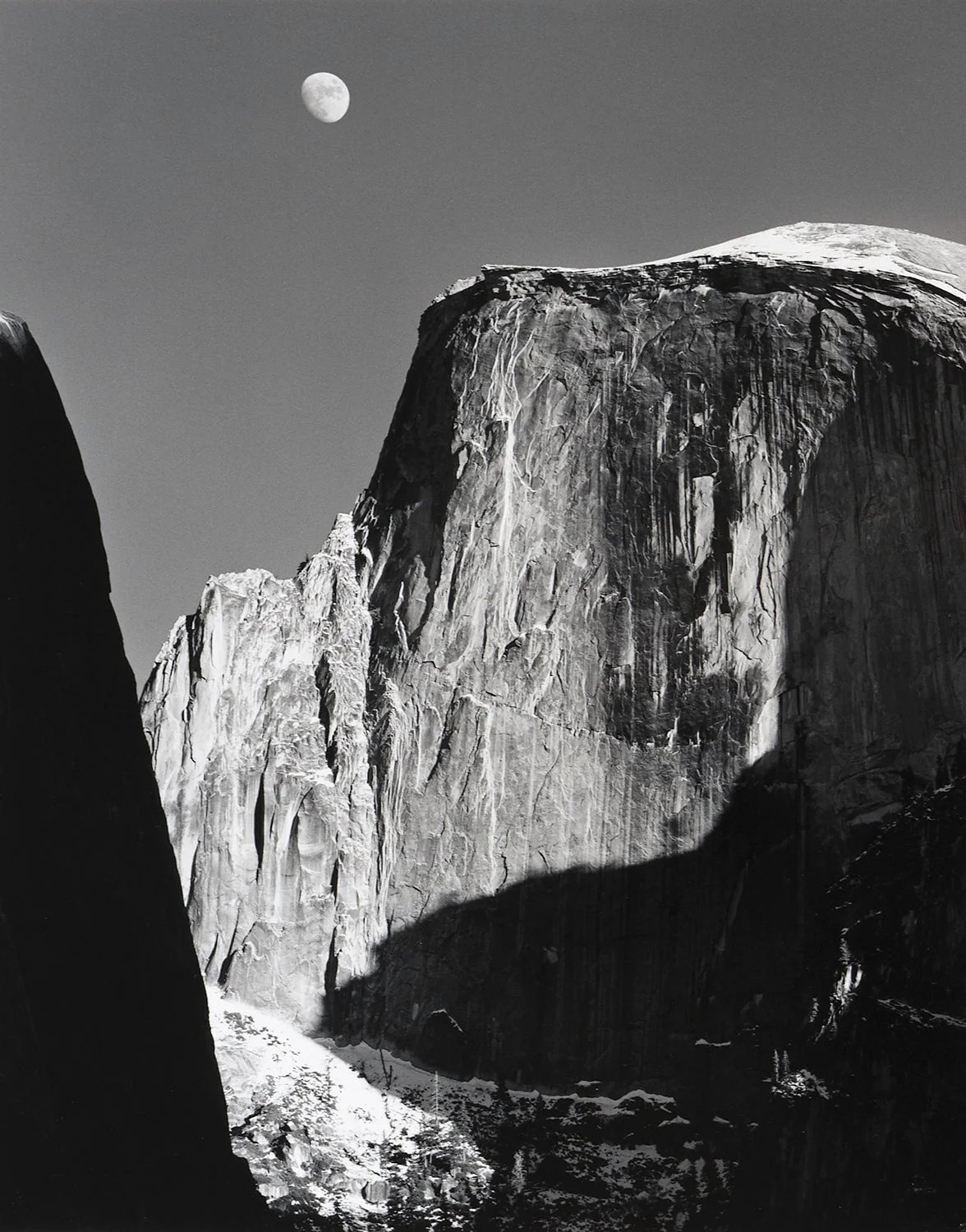
Moon and Half Dome, Yosemite National Park, California, 1960 (right)
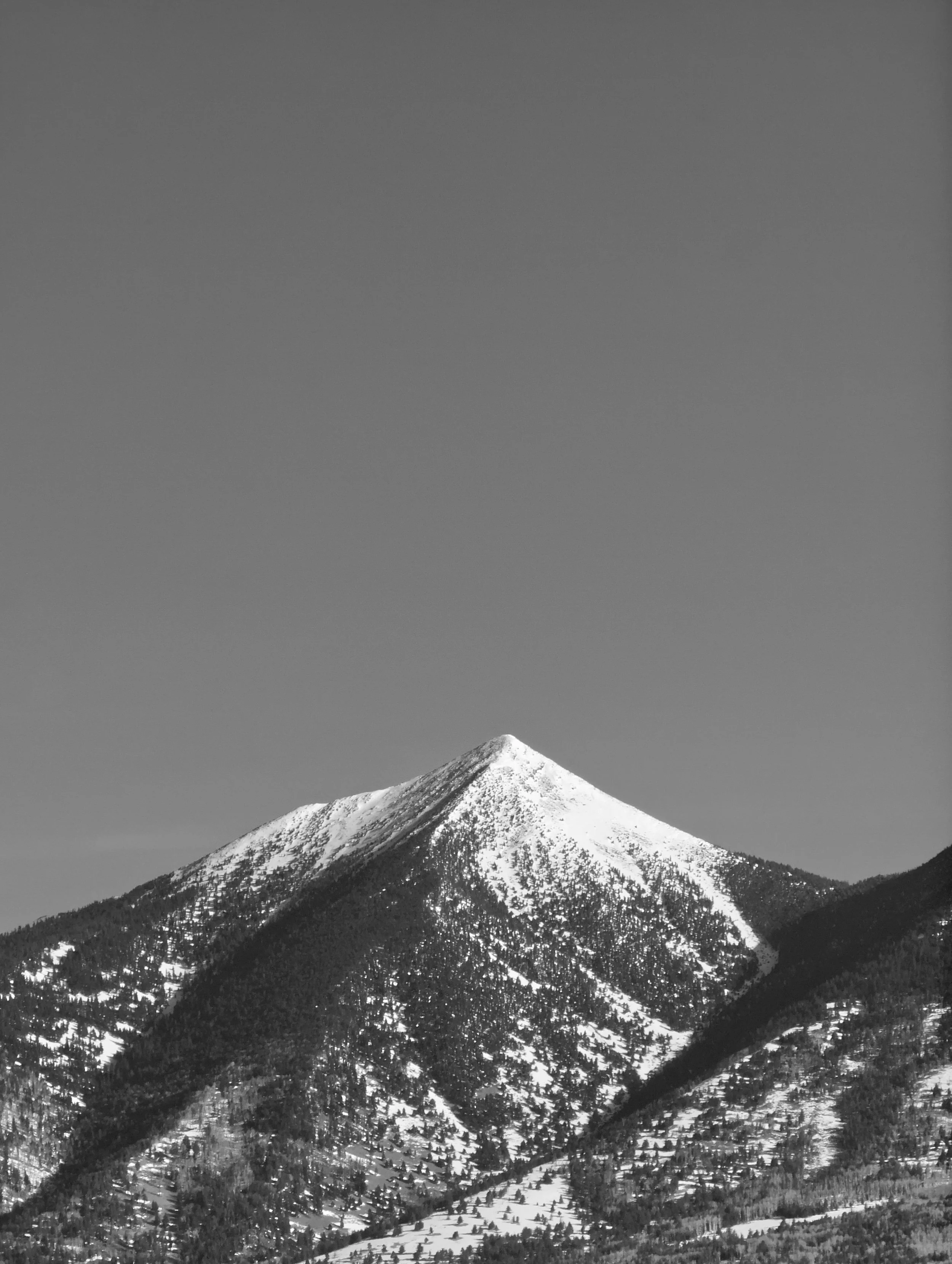
Ansel Adams’s photographic style is technical, precise, and has dramatic contrast. Best known for his black-and-white images of the American West, particularly advocating for nature such as Yosemite National Park, Adams emphasized sharp focus, rich tonal range, and compositional balance. His photographs present nature as monumental, timeless, and devoid of human presence. Adams rejected the notion of photography as a purely spontaneous act, instead treating it as a disciplined craft. Along with Fred Archer, Adams founded the Zone System, a tonal control framework designed to precisely manage exposure and development. This system allowed Adams to visualize the final print before releasing the shutter, ensuring that the photograph reflected his interpretation rather than a literal record of the scene.
I have long been a fan of Adams, with him being one of my first inspirations that brought me into the world of photography. As such, I have long tried to emulate his style, so I cannot be objective about what I have gained from emulating his style for just this project specifically. However, it had been a while since I shot nature, especially in black-and-white, so I greatly enjoyed re-immersing myself into this experience. I forgot the sense of wonder gained from capturing nature’s scale and beauty. Using the zone system also helped me predict how the shot would translate to black and white so that I could ensure my image would have contrast and tonal balance. Driving through Flagstaff, Arizona, I found an open field that had a clear, uninterrupted view of the mountains, and as this was in the tail end of winter, there was still snow on the mountaintop, lending to the tonal balance in the final image, allowing the sky to be the middle tone, the foliage on the mountain the shadow, and the snow the highlight. Similar to Adams adding his interpretation of the scene, I decided to use my power as the photographer to choose what to include and what to exclude from the frame. If I shot fully zoomed out from where I was standing, all of the grass, plants, and rocks of the field would have been in the shot. While this may lend an idea of scale to the mountain, I thought the mountain was more imposing and more timeless when it was the sole subject.
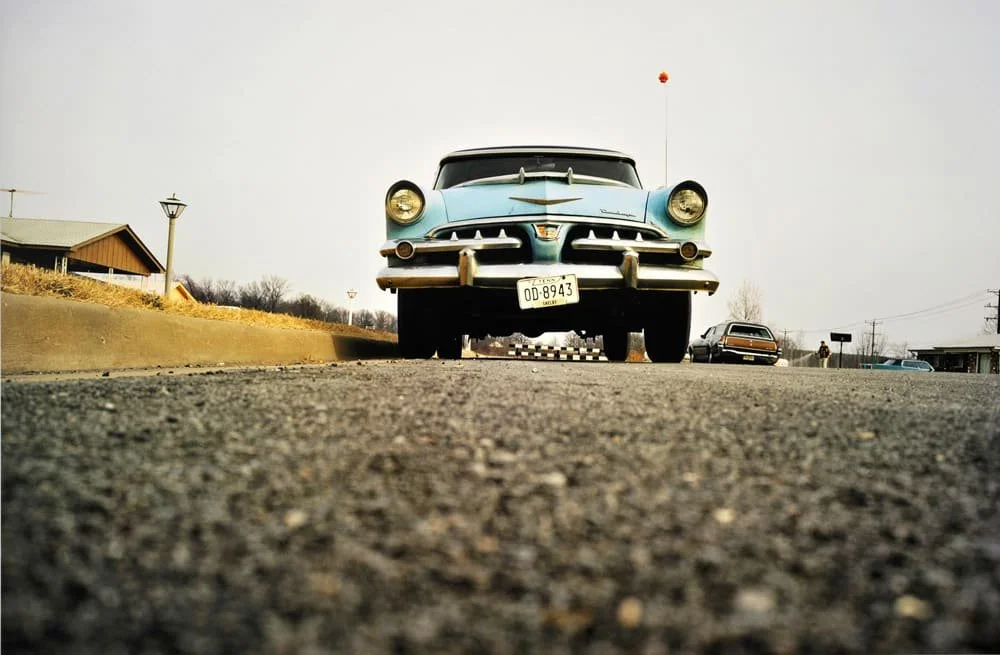
William Eggleston, Untitled, Memphis, TN (blue car on suburban street), 1970 (right)
William Eggleston’s style is to glorify the ordinary and to pioneer use of color as an expressive device. In the late 1960s and 70s, Eggleston rejected black-and-white fine art photography and embraced color. His images depict banal subjects—parking lots, grocery stores, interiors, street corners, and everyday objects—rendered with a detached tone that draws attention. Eggleston’s approach is rooted in what he described as a “democratic” vision: no subject is inherently more important than another. This philosophy results in photographs that lack a clear narrative framing, but still enjoyably depict fragments of American life. His composition is precise but understated, relying on geometry, color relationships, and spatial tension rather than decisive moments. Contrary to how he looks at the world and shoots his photos, Eggleston is rigorous in his printing process. He made extensive use of dye-transfer printing, a complex process that allowed for saturated, stable colors and fine tonal control. This technical commitment reinforced his goal—to make color itself carry meaning. Overall, Eggleston’s style ultimately redefines photography as an art of perception rather than record.
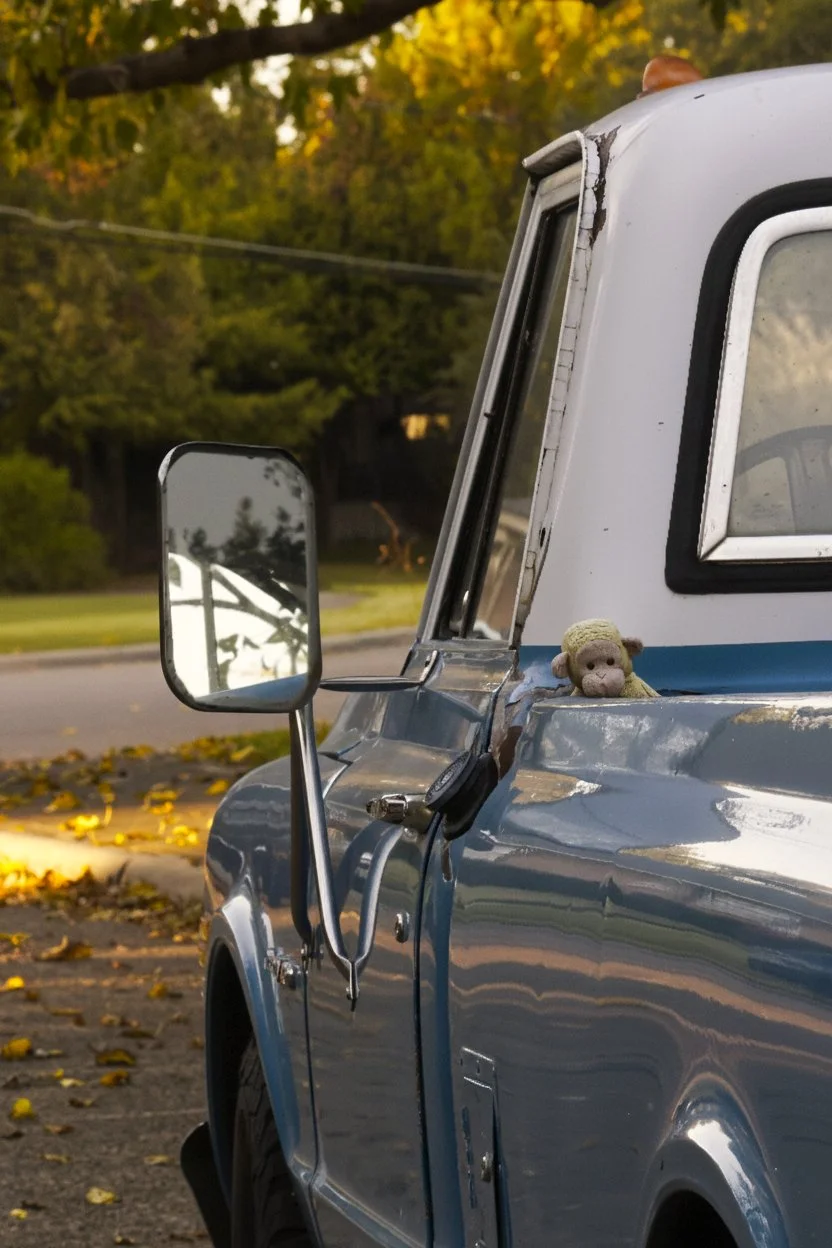
Like Ansel Adams, Eggleston has been a long time inspiration for me, but I find that it is difficult to emulate his style in today’s America, unless you live in a small, older town. Eggleston’s work features classic cars and older architectural styles. Of course, this fit Eggleston’s banal vision at the time, as that wasn’t an old style, it was normal, modern, new. However, it is undeniable that these styles lent themselves to a more interesting image, with more diverse colors, interesting shapes, and a better overall compositional balance. Fittingly, to immerse myself in Eggleston’s style, I drove through older neighborhoods in Dallas, Texas and found a few older cars and trucks. The one I chose to shoot, a Ford F-100 Ranger, likely around 1975 to 1980, had a older styled shade of blue that I knew would lend itself to the contrast against the pavement and fall-colored leaves. Thinking through Eggleston’s point of view, I imagined how to shoot this truck in a way that does not make it a spectacle, rather implying that it was just another object I passed by and decided to photograph. Simultaneously, I needed to figure out how to make the composition interesting, so I let the color relationships and the geometry of the truck do the heavy lifting by shooting at an angle that emphasized the depth of the truck being in the foreground and the interaction between the stuffed animal and the truck—two plain objects that share no similarities.
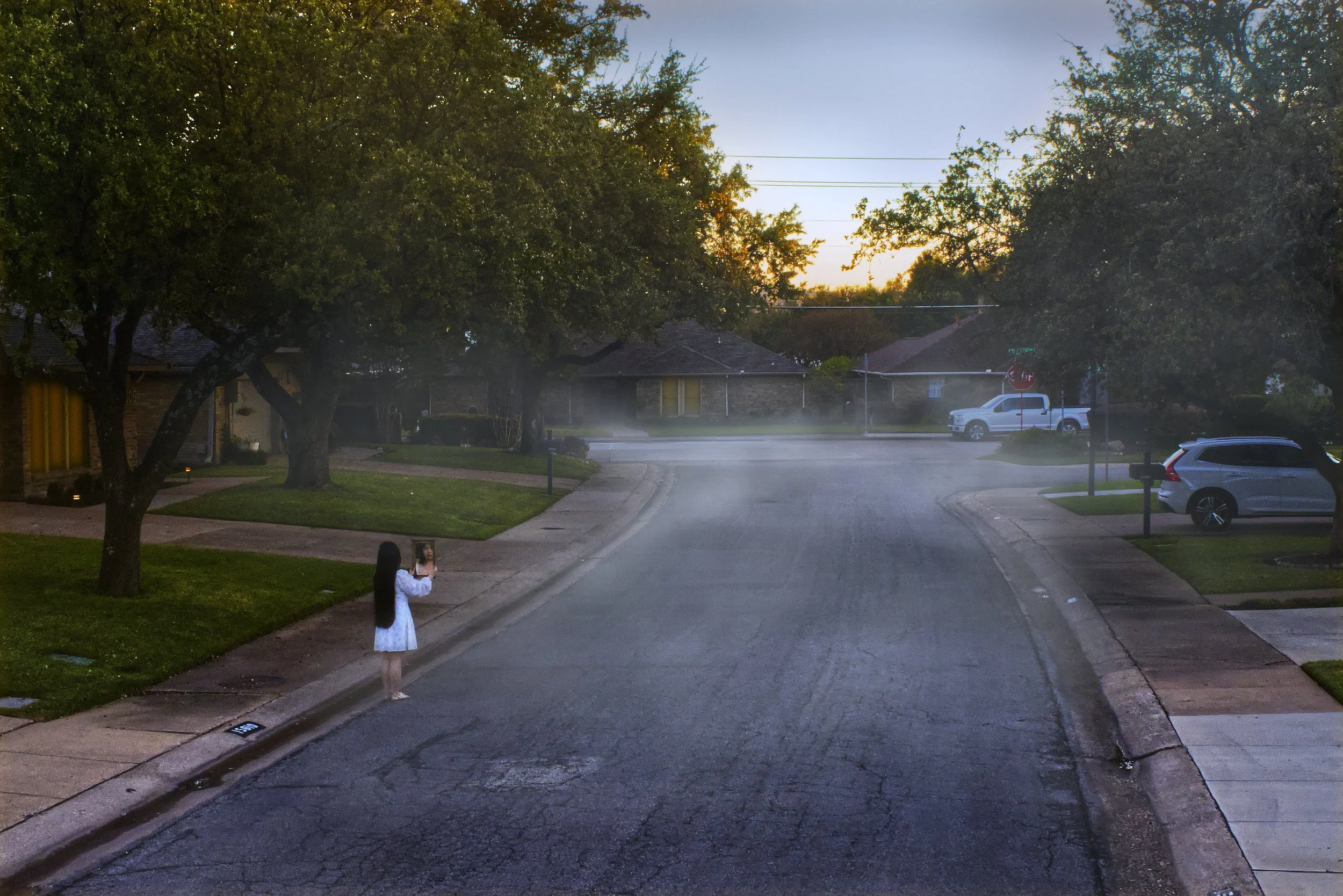
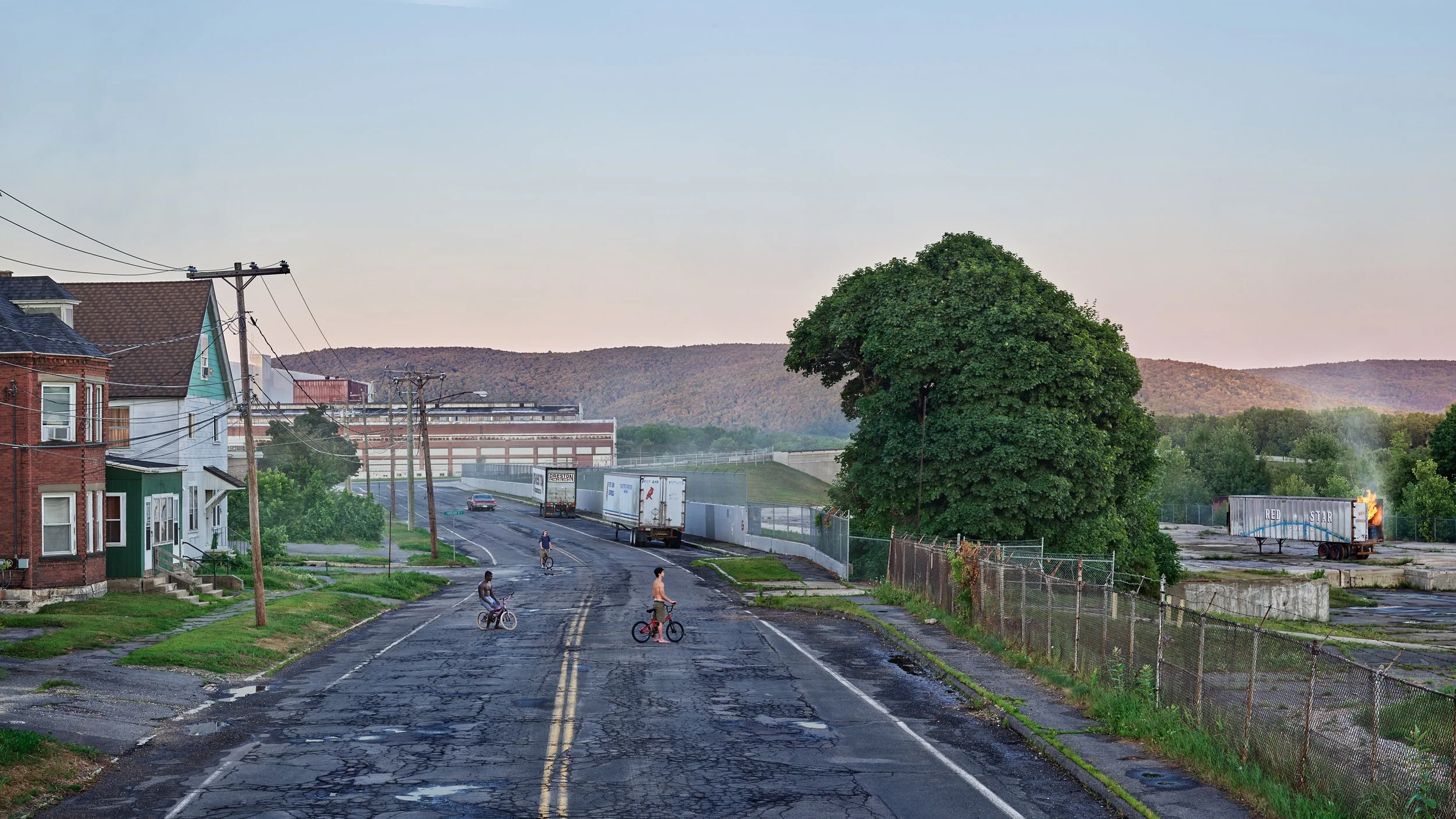
Gregory Crewdson, Red Star Express, 2018–19 (right)
Gregory Crewdson is a photographer who produces ultra-high quality images from layering multiple photos on top of each other, using images taken on a Phase One XT medium format camera and Sinar P2 rail-mounted large format camera. These cameras are much larger than the DSLRs most beginner photographers are familiar with, allowing them to capture much more detail in a single shot. Crewdson goes above and beyond by combining the best several dozen shots from one shoot into a picture that is perfect in every detail and every level of light. His shoots can often cost as much as $1M per final image, because he uses full movie production crews, with lighting rigs, set builders, fog machines, and a crane to allow him to shoot from a higher angle. Some of this cost also comes from the fact that he sometimes closes off entire streets for his shoots.
In trying to emulate Crewdson, I ran into a glaring roadblock; I don’t have $1M, a movie crew, full scale lighting rig, set, fog machine, and a crane. What I needed to do first was figure out how I could create an ultra-high quality image with just my DSLR, a tripod, and a model. Next, I planned a location for the shoot that had a wide, dark pavement street, as I knew this contrast and open space would lend itself to Crewdson’s aesthetic well. Upon reviewing my first final product, however, I realized how much deeper I would need to look into Crewdson’s style. My image was too bright, had harsh shadows, and I had not done my HDR calibration correctly the first time, so not all the shadows and highlights were in high detail. For my next attempt, I returned to the same street, with the same model, but later in the day. I took about twice as many shots this time, allowing myself to be sure of the HDR merging viability, as well as focus merging, as this would allow me to emulate the level of detail Crewdson displays in his images. Lastly, I worked on editing and color grading. Crewdson’s images have a dreamlike feel to them and a surreal level of storytelling from just one image. I added a faint glow to the windows of two houses, enhanced the glow of the sunset, lightened the value of the grass, and added a layer of fog over the street-a staple of Crewdson’s.